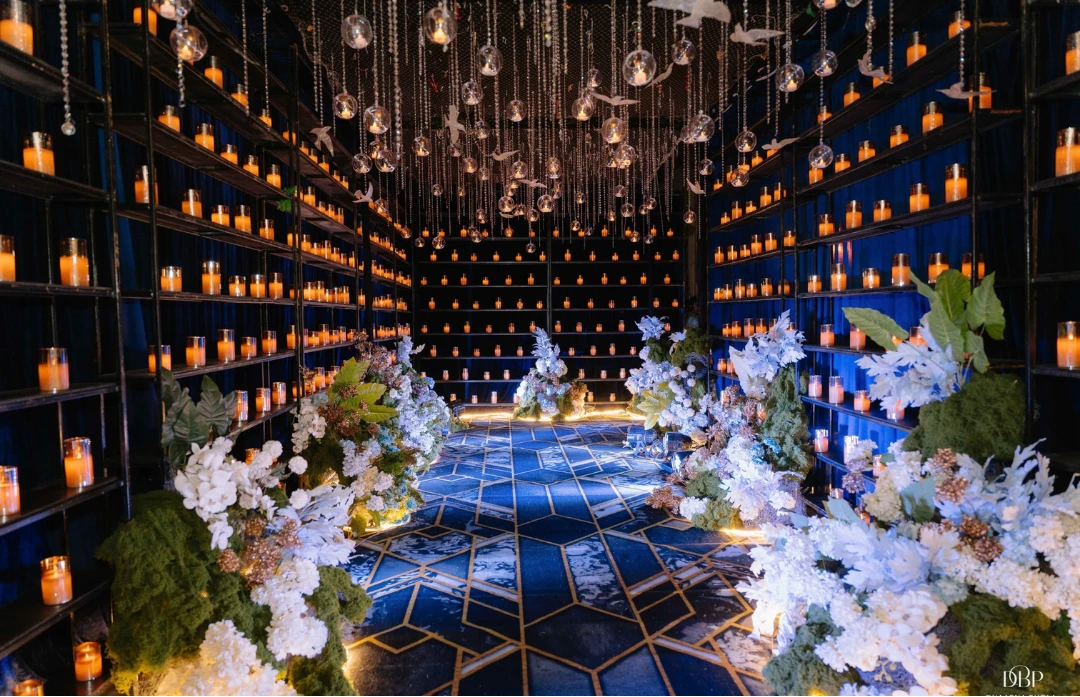
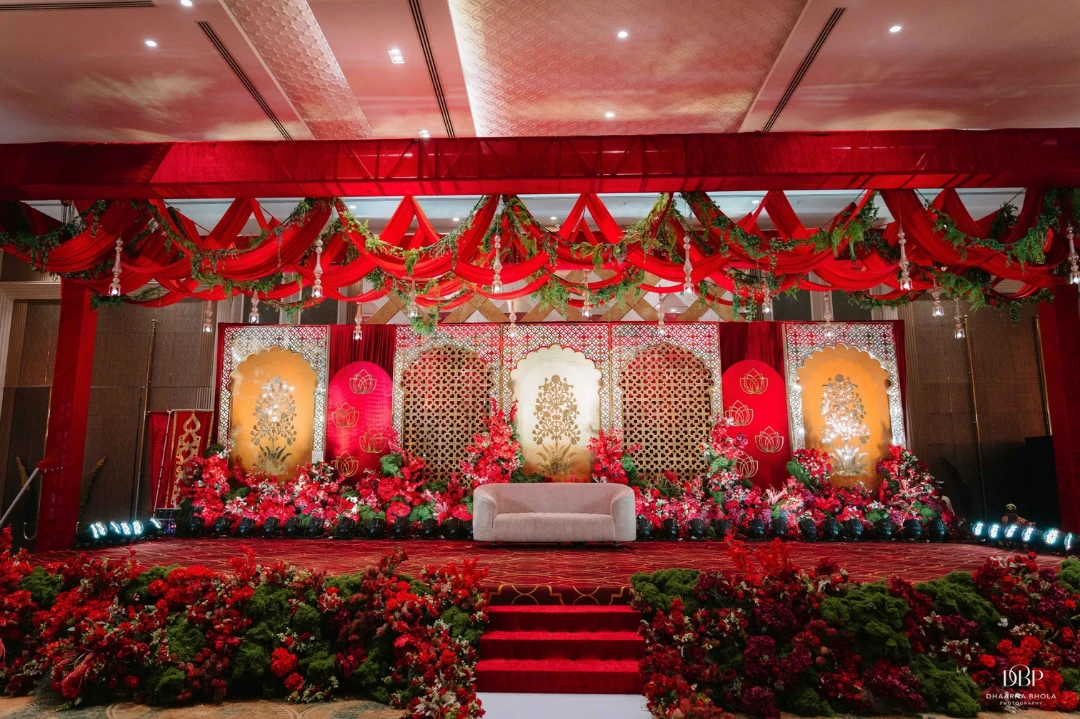
A wedding planner in Jaipur manages the date, the function schedule, vendor sourcing, guest arrivals and the days themselves, so the family is free to be hosts. Gātha plans Jaipur weddings from Pune, Maharashtra, with video walkthroughs, digital drawings and an on-ground team. Fees start at Rs 2,00,000 for weddings of Rs 30 to 60 lakh.
What a wedding planner in Jaipur handles
A wedding planner in Jaipur takes charge of the parts of a wedding that sit between the family, the venue and the vendors. Jaipur weddings are usually large. The city has palaces turned hotels, fort-style properties, heritage hotels and garden resorts, and the wedding itself often runs over three or four days with a baraat, a sangeet and several smaller functions. Someone has to hold that together.
The planner's remit in Jaipur is:
- Helping the family choose a date, and a fallback, that works for the muhurat, the venue and the guests' travel.
- Comparing the shortlisted properties on layout, rules and rooms, not on appearance alone.
- Writing the schedule for each day, with set-up and strike times that the venue and the production teams can follow.
- Sourcing and managing decorators, caterers, artists, photographers and sound and lighting teams in the city.
- Running guest arrivals, rooming, transfers and a guest relations team.
- Directing the functions on the day.
Gātha offers these under full planning.
Jaipur's wedding settings in general terms
A family usually meets four kinds of property when it begins to look at a Jaipur wedding.
- City palaces and heritage hotels, with courtyards, galleries and ceremonial spaces that give the wedding a ready backdrop.
- Fort-style properties, which often combine grand entrances with rooms and open terraces.
- Garden resorts, with large lawns, easy vehicle access and more flexibility in layout.
- Banquet halls and farm-style lawns for pre-wedding functions or a larger reception.
Properties differ in how far they are from the airport and the city centre. Some sit away from the centre, so transfer time is part of the plan. No venue is named here, and no claim is made about any venue's rules. Ask each property for its own, in writing.
The guide to destination weddings in Jaipur looks at the same settings from the guests' side.
Planning a wedding of Rs 30 lakh or more? Share the shape of your celebration and the team will read it personally.
Begin your application →The usual three to four day structure
The programme below is a common arrangement in Jaipur. Your family's rituals will shift it.
| Day | Typical programme | Where planning effort goes |
|---|---|---|
| One | Arrivals, welcome lunch or evening, family meetings | Airport and station pickups, rooming, the welcome desk |
| Two | Haldi, mehendi, sangeet | Daytime shade, artists, choreography rehearsal slots, sound timing |
| Three | Baraat, ceremony, reception | Route and timing of the baraat, the main set, the tightest schedule |
| Four | Farewell, departures | Check-out windows, vehicle plan, luggage |
For families who follow Marwari traditions, the Marwari wedding planning page lists the rituals that tend to add functions or change the order. A planner builds those into the schedule at the start so that the venue and vendors can plan around them.
The baraat deserves its own check. Ask the venue where it can gather, whether horses, dhol and vehicles are permitted on the grounds and what it needs from you in advance.
Guest arrivals in Jaipur
Jaipur has an airport and a railway station and is reachable by road, so guests can come by several routes. A planner turns that into an arrival plan: guests are grouped by arrival window, each window has a vehicle and a point of contact, and the rooming list is ready before anyone checks in.
Plan for the unexpected. Flights shift, trains run late and some guests will drive in with no notice. A guest relations team at the property keeps a live list and makes the changes. It should also look after the guests who need more help: elders, young children, and relatives travelling alone.
On departure day the same team works backwards from the flight and train times. The wedding is judged by how the last morning goes as much as by the first evening.
Finding vendors on the ground from Pune
A planner based in Pune does not carry Jaipur's décor, catering and artist networks in a bag. For each wedding in another city, the team builds a shortlist, checks it on the ground and presents it to the family before anything is commissioned.
- Brief: the family's design direction, the guest numbers and the venue's constraints go into a written brief for each vendor.
- Shortlist: two or three vendors per category are compared on work shown, availability and what they can do inside the venue's rules.
- Check: the on-ground team meets the vendor, and where it applies a tasting or a sample is arranged.
- Review: the family sees drawings, menus and artist options on the digital dashboard or in a video review.
- Commission: the family approves, and contracts are made with clear inclusions.
This is how Gātha plans any destination. It is not a record of past Jaipur work, and the page makes no such claim.
Planner and venue: where each role ends
The venue is responsible for its property: the spaces, the rooms, the kitchen if it has one and the rules of the building. The planner is responsible for the wedding that runs inside it. When something falls between the two, for instance a delay in loading in, a missing power connection or a change in the guest count, the planner is the person who resolves it with the family's interest in mind.
The venue's team will often offer coordination. That is useful and it should be taken. It does not replace someone who answers to the family alone and who has read all the contracts, as the guide to wedding planner versus coordinator explains.
Season, availability and lead time
Winter, roughly November to February, is when most families prefer to marry in Rajasthan, so the most-requested dates are taken first. Gātha's own advice is that six to twelve months ahead is ideal for a full wedding, and that peak-season and destination dates are often closed a year ahead. Shorter timelines have been handled, and the team tells you plainly what is still possible. Summer is very hot and the monsoon, roughly July to September, brings rain, and both call for covered and indoor options.
Fees, limits and how to apply
Gātha is a boutique planner and takes a limited number of weddings each year. The planning fee is tiered by the overall investment: Rs 2,00,000 onwards for Rs 30 to 60 lakh, Rs 3,00,000 onwards for Rs 60 lakh to 1 crore and Rs 5,00,000 onwards for Rs 1 crore and above. It covers design, planning and direction, and the venue, décor and vendor costs belong to the family's budget. For more on what the fee covers, read the page on wedding planner cost.
Gātha does not take weddings with a total budget under Rs 30 lakh, does not sell venue booking by itself and does not decorate wedding cars. The cost side of a Jaipur wedding is covered in the Jaipur destination wedding cost guide.
To begin, send the application form. The team replies within two working days.
Questions people ask
Keep reading
Updated 2026-11-05