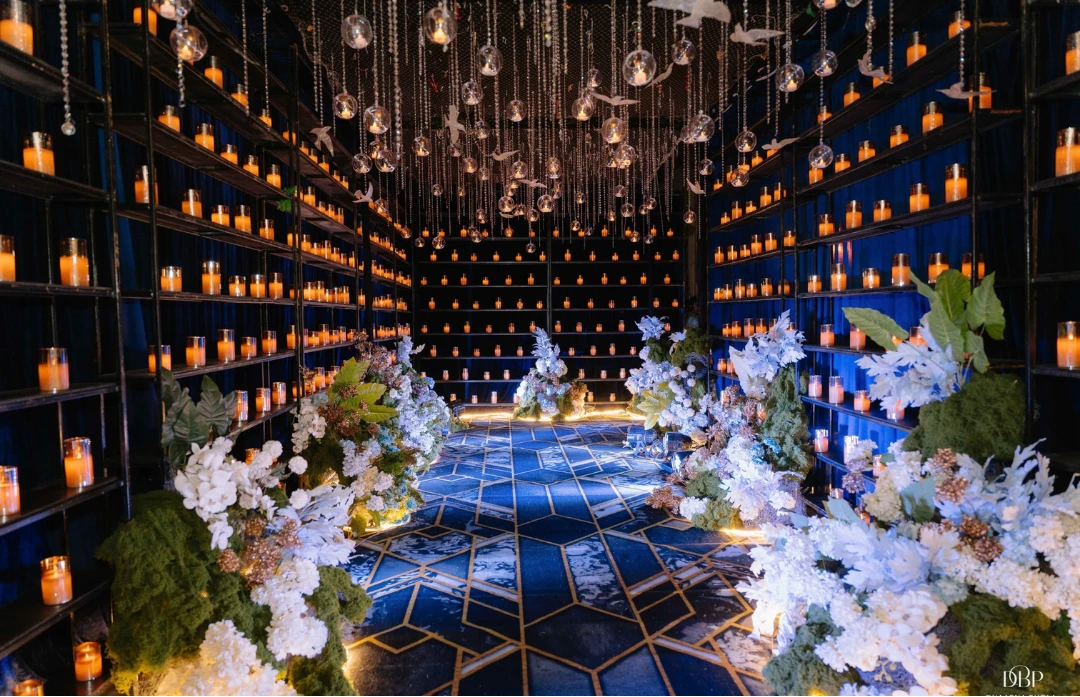
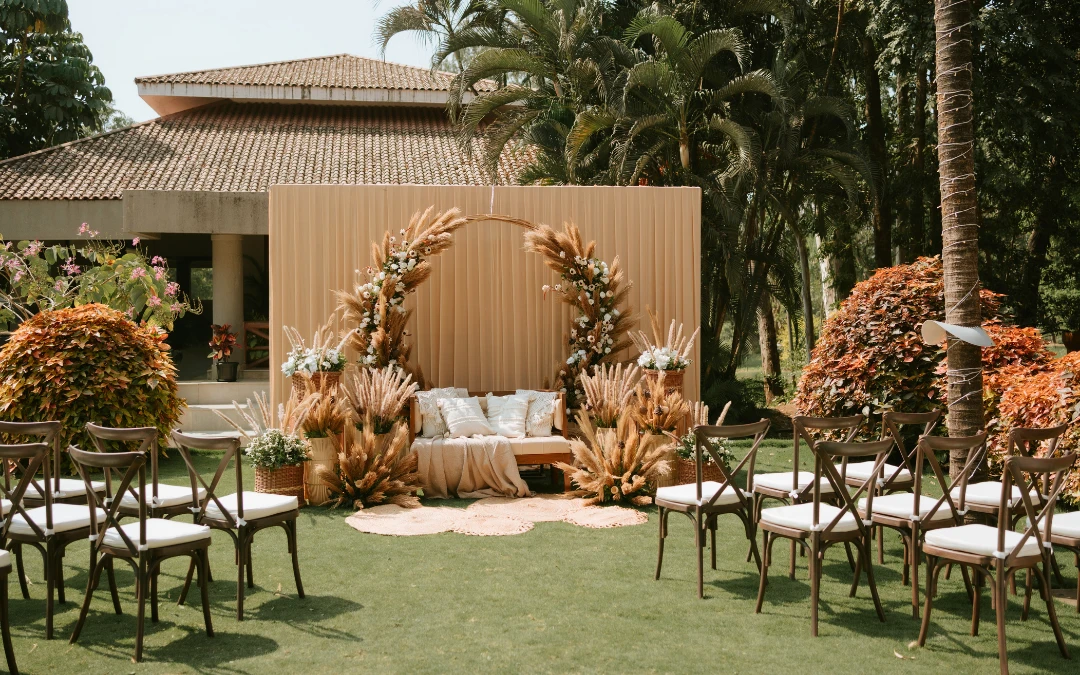
Wedding venues in Karjat are mostly resorts and private farmhouses in the Sahyadri foothills, reachable by road and rail from both Mumbai and Pune. Resorts bring rooms and an events team; farmhouses bring privacy but few beds. Check guest rooms, the music cut-off hour, the monsoon cover plan and vehicle access before you pay a deposit.
Wedding venues in Karjat and why families choose the town
Karjat is in Raigad district, at the foot of the Sahyadri hills, and it lies on the railway line that joins Mumbai and Pune. That position is the main reason it appears on wedding shortlists. A guest list split between the two cities can reach the venue without a flight, and a weekend of two or three days fits inside a normal working week for most people.
Wedding venues in Karjat come in two broad formats, resorts and farmhouses, with a handful of in-between properties that are sold as villas or estates. This guide is about choosing among them. For how a two to three day wedding is laid out once you have picked, see the planning view at destination wedding in Karjat, and for the wider region, destination wedding near Mumbai.
Wedding resorts in Karjat: what the format offers
A resort is built to host groups. It usually has guest rooms on site, a main lawn or banquet space, a kitchen that serves large numbers, and staff who handle check-in. For a wedding, the main benefit is that the family stays together and the venue already has an operating routine.
The limits are control and sharing. A resort may have house rules on decor, caterers and music, and its own events team may want to be involved in the run of the day. Ask whether the resort can be booked as a whole property for your dates, or whether other guests may be staying at the same time. If other guests are there, ask how noise and access are managed. Also ask how many of the rooms are on site and how many guests would have to sleep somewhere else.
Planning a wedding of Rs 30 lakh or more? Share the shape of your celebration and the team will read it personally.
Begin your application →Farmhouses and private estates
A farmhouse is a family property with land, usually hired for a few days. It gives privacy, wide open ground and more freedom over the layout and the vendors you bring. Many families like that nobody else is on the property.
The trade-off is infrastructure. A farmhouse may have a handful of bedrooms, which means most guests sleep at a nearby resort or hotel and travel each day. Kitchens, toilets, power and water are often built for a household, not for a few hundred people. Ask who supplies the extra toilets, a generator and drinking water, and who is responsible if the weather or the supply fails. Ask to see the ground after rain if the property is visited in the dry months.
Getting guests there by road and rail
Karjat is a junction station. Suburban trains from Mumbai run to it, and trains between Mumbai and Pune pass through it. The last stretch from the station to the venue is by road, and its length depends entirely on where the property sits. Ask each venue for the drive time from Karjat station and from the nearest main road, not a general figure for the town.
For a guest list of more than sixty, a coach from each city is usually simpler than a convoy of private cars, and it avoids parking pressure at a rural gate. Plan separate arrival windows for Mumbai and Pune guests, and ask the venue where coaches can turn around. Elderly relatives often prefer a car for the whole journey, so reserve a few vehicles for them. Confirm road conditions on the day with the venue, because rural lanes can flood in heavy rain.
Rooms for guests: count beds, not capacity
Venue brochures quote capacity as a number of people at a function. That number says nothing about sleeping. Ask for the count of rooms, the bed types in each, and whether extra beds can be added. Ask how many people the rooms hold at the standard sleeping arrangement, then compare that with your out-of-town guest list.
When the property cannot sleep everyone, name a second place early and decide who goes where. Elders and close family usually stay on site, younger guests at the overflow stay. See wedding guest hospitality for how check-in, room lists and welcome arrangements are handled, since these tasks grow quickly when guests are split across two properties.
Noise, curfew and neighbours
Karjat venues are in rural and semi-rural settings, but that does not mean there are no limits on sound. Properties set their own cut-off for loud music, and local rules can apply on top of the venue's policy. Do not assume that a farmhouse allows a late sangeet. Ask the venue for its cut-off hour for amplified music and for the baraat, and ask what it requires for fireworks, horses or drums. Confirm all of these with the venue before you design the programme around them.
A good question to ask is how the venue handles a complaint on the night, and who at the venue has the authority to make a call. Plan the loudest part of the evening, usually the dance floor, for the hours that are clearly allowed, and keep a quieter fallback inside.
Monsoon, heat and the rain plan
The monsoon in Maharashtra runs from about June to September. In Karjat the hills turn green and the rivers and streams fill, which many people find beautiful and some find hard to work with. Rain affects the ground, the roads, the electrics and the mood of any outdoor ceremony. Winter, roughly November to February, is cooler and drier and is the more usual choice for lawn weddings. The summer months can be hot, so shade and cooling matter then.
For a monsoon date, a covered space that fits every guest at the main function is a requirement, not an option. Ask whether a covered space of that size exists, how long it takes to switch from the lawn plan to the covered plan, and who makes the call. Walkways between rooms and the main space also need cover.
Power, water and outside vendors
Ask whether the venue has its own generator and what load it can carry. Decor lighting, a stage, sound and catering all draw power. Ask where the caterer cooks and how water reaches the kitchen. Ask whether outside vendors may enter on the day before, and whether the venue charges a fee. Narrow access roads can stop a large truck, so ask the biggest vehicle that can reach the lawn.
A visit checklist for comparing Karjat venues
Take the same list to every property and score each answer, so you compare like with like.
| Check | Ask the venue |
|---|---|
| Rooms | How many rooms and beds on site, and are they ours exclusively? |
| Access | Drive time from Karjat station and the biggest vehicle that can reach the gate |
| Sound | Cut-off hour for amplified music and rules on fireworks and procession |
| Rain | A covered space for every guest, and the hour the call is made |
| Power | Generator size, backup and fuel arrangements |
| Vendors | Outside caterer, decorator and DJ allowed, with any fee |
| Water and toilets | Supply for the full guest list and who adds the extra facilities |
| Day before | Can vendors enter early, and where is equipment stored |
Where Gātha fits
Gātha is a boutique wedding planner and atelier in Pune, Maharashtra. It does not book venues on their own; shortlisting is part of full planning, decor and guest hospitality. Gātha has no published record of weddings in Karjat, so this describes how a Pune team would plan one. To discuss a date, send the application form; the team replies within two working days. Weddings with an overall investment under Rs 30 lakh are outside what it takes on.
Questions people ask
Keep reading
Updated 2026-11-05