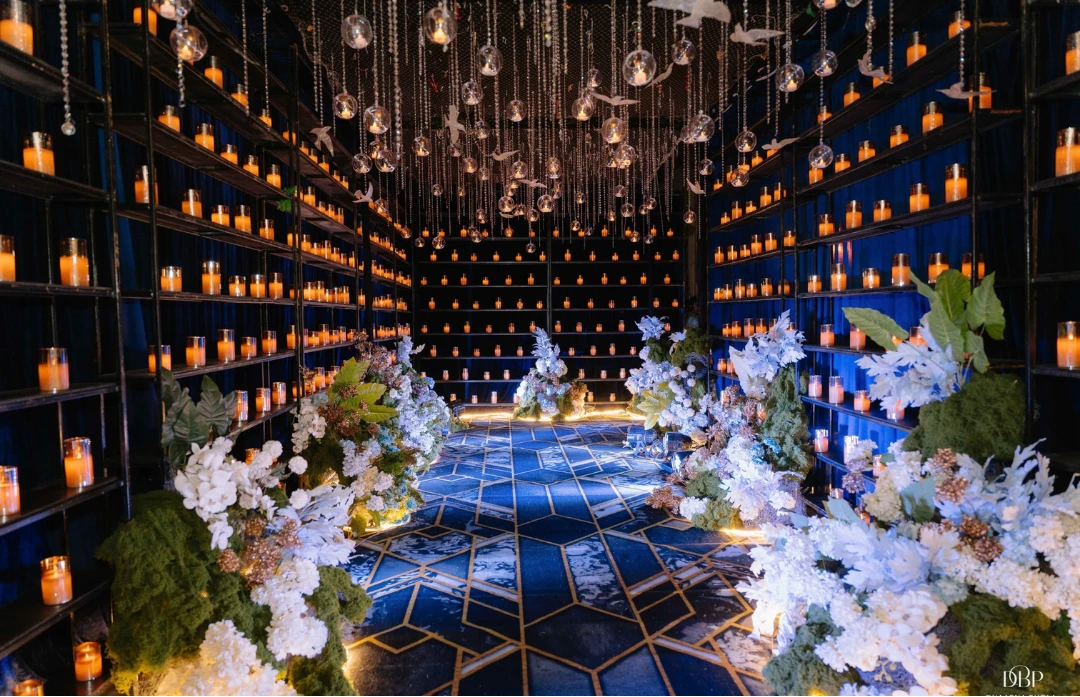
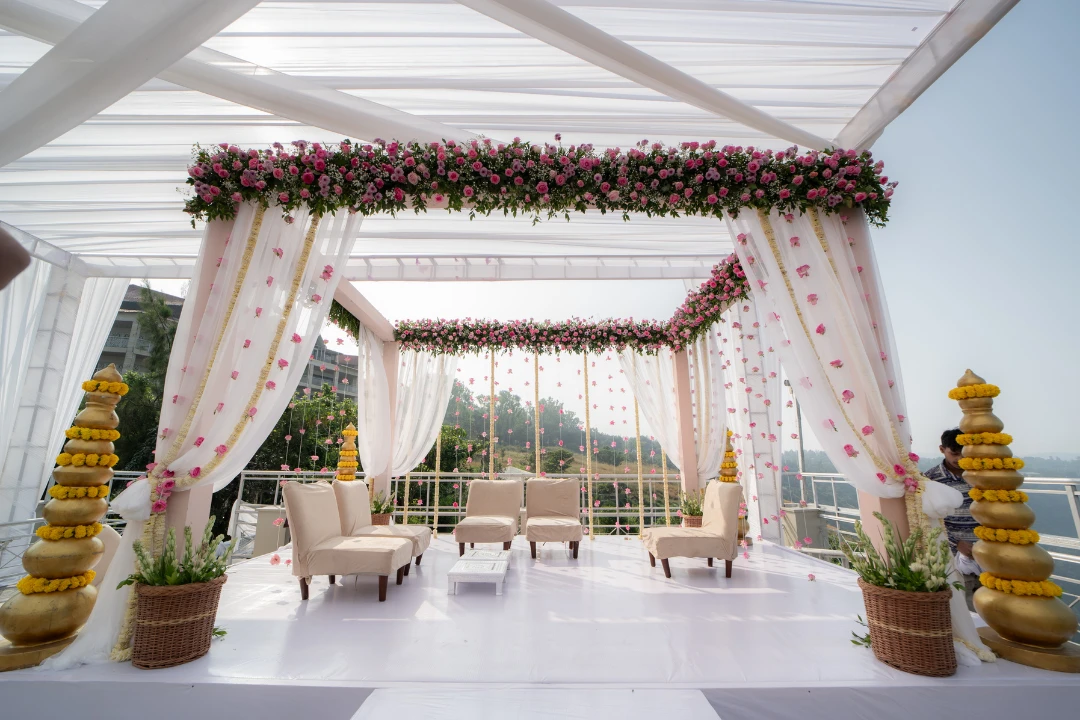
A destination wedding in Karjat is usually a two to three day stay for guests travelling from Mumbai and Pune. Planning centres on a day-by-day schedule, coaches timed to both cities, decor that arrives a day early because the town has no supply of its own, and a rain plan with a decision hour. Gātha's planning fee starts at Rs 2,00,000.
Destination wedding in Karjat: the planning view
A destination wedding in Karjat is planned around one fact: the guests arrive from outside and everything the wedding needs has to arrive with them or before them. The town has venues and resorts, but it is not a city with a florist on every street, a bench of event vendors or a quick supply of last-minute equipment. That puts the weight on the schedule and the logistics, and less on the choice of backdrop.
This page is the planning side. For the venue side, meaning resort and farmhouse types and the checks to run on each, read wedding venues in Karjat. For the wider choice of Maharashtra locations, see destination wedding in Maharashtra.
A two to three day layout
Karjat suits a compact programme. The table shows a common shape for a three day wedding; a two day wedding folds the first day into the second.
| Day | Morning | Afternoon | Evening |
|---|---|---|---|
| Day 1 | Guest arrivals in two waves, one from each city | Check-in, welcome lunch, mehendi | Sangeet or a family dinner |
| Day 2 | Haldi | Rest, then dressing | Ceremony and reception |
| Day 3 | Farewell brunch | Check-out and coaches back | None |
Put the loudest function on the evening with the most generous cut-off hour, and keep the ceremony in the light of the day it falls on. Leave a quiet gap in the middle of Day 1 so early arrivals are not pushed into a function straight off the road.
Planning a wedding of Rs 30 lakh or more? Share the shape of your celebration and the team will read it personally.
Begin your application →Guest transport from Mumbai and Pune
Karjat is on the rail line between the two cities, but that does not mean everyone should take a train. A planned coach from each city, with a fixed pick-up point and a printed passenger list, keeps the guest list together and removes the scramble for taxis at a small station. Staggering the two arrivals by an hour or two avoids a crowd at check-in.
Plan a smaller set of cars for elders, for the bride and groom's immediate family and for guests who arrive off schedule. Add a transport desk at the venue for the first and last day, with a named person and a printed schedule. On departure, work backwards from the earliest onward train or flight and set the coach time accordingly. The destination wedding guest accommodation guide covers room allocation, which has to be settled before transport can be assigned.
Decor and equipment outside a city
Decor for a Karjat wedding is built on site, away from a studio. Flowers, fabric, frames and lighting usually come from Mumbai or Pune, and every item has to survive the journey. That favours a load-in plan: structures go up on the day before, fresh flowers on the morning of the event, and a small repair kit stays on site for anything that breaks.
Ask the venue about power before the designer draws the lighting. A stage, sound and decor lighting together can exceed what a small property supplies, so a dedicated generator is often part of the plan. Think about the ground too: lawns that look flat can be soft after rain, and heavy structures need a firm base or flooring under them. The wedding stage decoration guide covers the design side.
The rain plan
A rain plan is a second layout, not a tent that appears when it rains. For each function, the team prepares an indoor or covered version of the same programme, decides who gives the order to switch and sets an hour at which it must be made. For an evening ceremony, that hour is often early afternoon, because decor and seating take hours to turn over.
In the monsoon months, from about June to September, the covered version becomes the main plan and the lawn version is the bonus. Cover the walkways between rooms and function spaces, and keep towels, footwear mats and an umbrella stock at the entrance. Tell guests the plan in advance so nobody is surprised.
Artists, caterers and the vendor team
Artists and bands travel to Karjat, so ask each for the call time, the equipment they bring and the green room they need. Catering for a large group usually runs from a kitchen set up for the event, so the caterer needs to see the site before the menu is fixed. Vendor staff need a place to sleep and eat, and the cost of that sits inside the family's own plan. Gātha acts as one point of contact for all vendors, so the family does not coordinate them separately.
How Gātha plans a Karjat wedding
Gātha is a boutique wedding planner and atelier in Pune, Maharashtra. It has no published record of weddings in Karjat; this page describes how the team would plan one. It works from application to design and quote, and only begins once there is a fit. The planning fee starts at Rs 2,00,000 for weddings of Rs 30 to 60 lakh, Rs 3,00,000 onwards for Rs 60 lakh to 1 crore, and Rs 5,00,000 onwards beyond that. Venue, decor and vendor costs sit inside the family's own budget and are shown openly.
Gātha does not do venue booking alone or weddings under Rs 30 lakh in total. To start, use the application form.
Questions people ask
Keep reading
Updated 2026-11-05