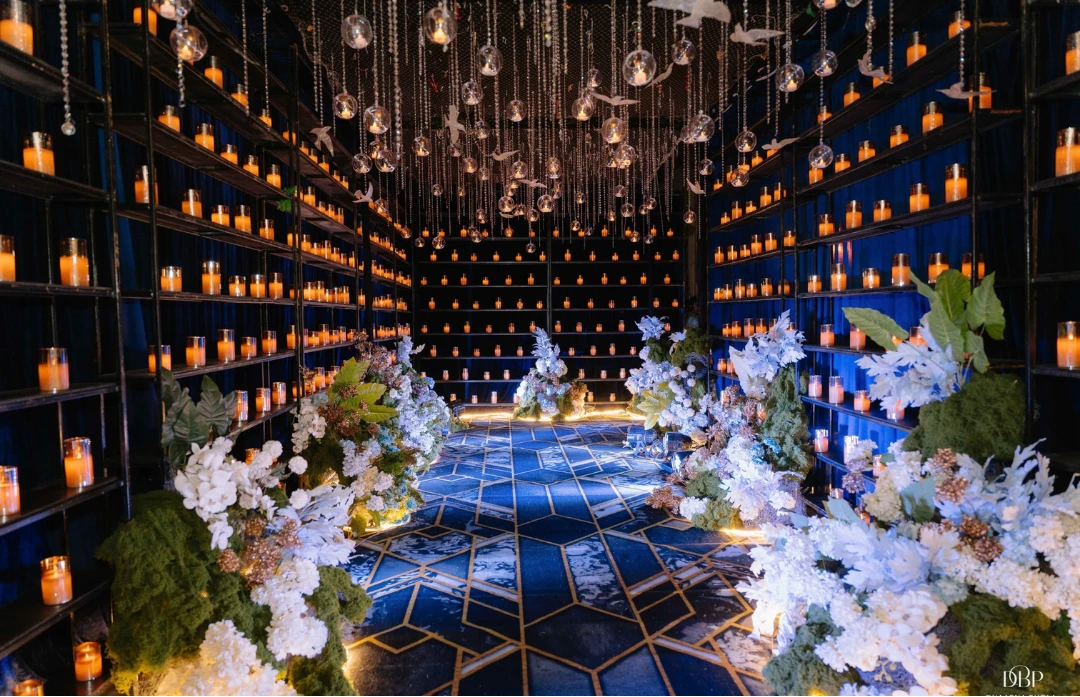
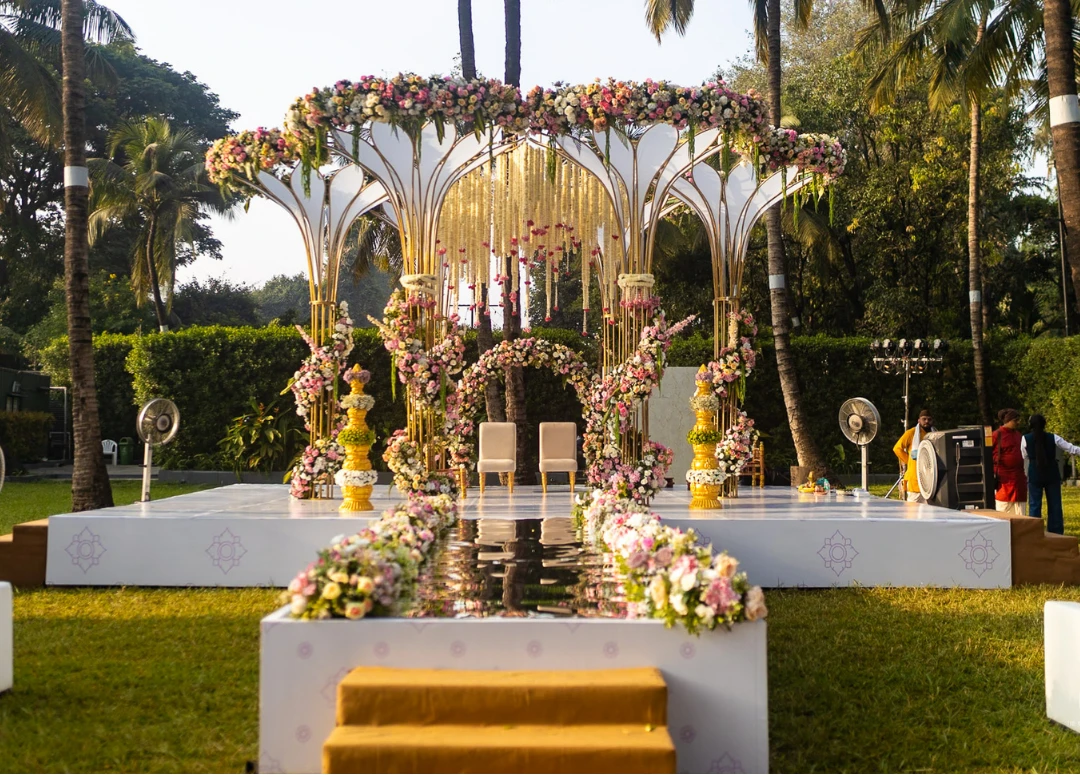
Wedding resorts in Goa suit families who want guests to sleep, eat and celebrate on one property. The choices that matter are buyout or room block, how many beds match your guest list, check-in windows, which functions go to the pool, lawn or hall, the resort's rules on outside vendors, and the monsoon plan.
Wedding resorts in Goa: the stay is part of the venue
Wedding resorts in Goa differ from other venue types because they sell rooms and spaces together. Guests walk to the ceremony from their beds, kitchens and staff are on site, and transport between functions mostly disappears. The trade-off is that the property runs by its own rules, and a wedding has to fit inside them.
This guide is about the resort format only. For the comparison with villas, heritage properties and open beach settings, read the guide to wedding venues in Goa, which sets out all four types. The ceremony-on-sand question has its own page: beach wedding in Goa.
Buyout or room block
There are two basic ways to take a resort for a wedding. In a buyout the family has the whole property to itself for the agreed dates. In a room block the family holds an agreed number of rooms, and the resort may continue to sell the rest to other guests.
| Question | Buyout | Room block |
|---|---|---|
| Who else is on the property? | Only your guests and the wedding team | Other guests may be staying, dining and using the pool |
| Privacy and noise | Easier to control | Music and crowds can disturb other guests, so the resort may limit them |
| Risk if fewer guests come | You commit to the whole property | You commit to the rooms you hold; check the release date |
| Flexibility on spaces | Usually the most | Shared spaces may be booked or restricted |
Whichever you choose, ask for the definition in writing. A "buyout" at one property may exclude a restaurant or a spa that stays open to the public. Ask also what happens to rooms you do not fill. Some contracts let you release rooms by a certain date, and some do not.
Planning a wedding of Rs 30 lakh or more? Share the shape of your celebration and the team will read it personally.
Begin your application →Guest rooms: count beds against names
A resort's room count is not the same as the number of guests it can sleep. Build a simple sheet before you shortlist, with one row per family unit, and check it against the room types on offer.
- How many rooms are family-sized, and how many can take an extra bed or a connecting door?
- Which rooms are on the ground floor or near the lifts, for elders and anyone with limited mobility?
- Do the children's beds count in the room total?
- Where will the artists, decor crew and photographers sleep? They need rooms too, and they usually arrive before the guests.
- Is there a room for the bride's and groom's families to dress in near the ceremony space, in addition to their own rooms?
If the resort cannot hold everyone, you will have a second property, which means a shuttle, a second check-in desk and a second set of room keys. Compare that cost in effort against a smaller guest list. The guide to wedding guest hospitality explains how the desk and the guest relations team work.
Check-in and checkout windows
Resorts usually have a standard check-in time in the afternoon and a checkout time in the morning. Wedding guests rarely arrive to that pattern. Flights land early in the morning and late at night, and trains arrive at odd hours.
Ask the resort these questions before you send out travel details:
- Can rooms be ready early for the families, and for how many?
- Is there a lounge or a holding room where early arrivals can freshen up, leave bags and eat?
- What is the checkout rule on the morning after the main function, when many guests will have slept late?
- Can bags be stored after checkout so guests can attend a farewell lunch?
- Who runs the welcome desk, and does it have the final guest list with room numbers before the first arrival?
A guest who waits in a lobby with luggage starts the wedding in a bad mood. A clean arrival is simple to plan and hard to repair.
Poolside, lawn and indoor functions
A resort gives you several kinds of space, and each function should go where it fits. A good starting layout looks like this.
- Mehendi and welcome lunch work well near the pool or in a garden, with shade and low seating.
- Haldi is messy. Ask what the resort allows on its floors, lawns and poolside, and who cleans afterwards. Turmeric and colour stain.
- The ceremony and the main dinner need the biggest flat, covered or coverable space. Check the lawn size with the stage, seating and food counters in place.
- The sangeet needs a stage, a dance floor and sound. Ask which spaces allow amplified music, and until what time.
Two safety points deserve a direct conversation. A stage or a bar next to a pool needs a plan for guests who have been celebrating, and for children. And fire rituals need an approved spot. Ask where a havan is allowed, how close it can be to roofs and drapes, and who clears it.
Outside vendor rules
The resort's rules on outside vendors can change the quality of your wedding more than the venue fee does. Ask before you sign.
| Area | What to ask |
|---|---|
| Decor | Is an outside decorator allowed? Is there a fee, and is there an approved list? |
| Catering | Must food come from the resort kitchen, or can an outside caterer cook on site? |
| Bar and alcohol | Does the resort require its own bar service? |
| Artists, DJs and sound | Which sound systems may be used, and where? What is the volume and time limit? |
| Photography and drones | Are there restricted areas or timings? |
| Load-in | Which gate and route do trucks use, and when? Where is storage? |
| Power | What supply is available, and can extra generators be placed? |
Get the answers in the contract or in an attached sheet. Verbal assurances from the sales team are not the same as the rules the operations team enforces on the day.
Monsoon and the resort wedding
The monsoon in Goa runs roughly from June to September. A resort has an advantage here, because it normally has an indoor hall, covered walkways and a restaurant that can be used as a fallback. But the fallback has limits.
- Check whether the indoor space seats the full guest list for the ceremony and the dinner, not just one of them.
- Ask which pools, lawns and restaurants are open in the monsoon, because some properties run reduced services in those months.
- Allow for slower roads and delayed flights, and build slack into arrival days.
- Keep two decor layouts, one open-air and one covered, so the change of plan is a move rather than a rebuild.
Outside the monsoon the question becomes dates. Peak-season dates are often closed a year ahead, so the resort conversation comes first and almost everything else follows from it.
Where resort choice sits in the planning
Choosing a resort is the point at which most Goa plans become real, because dates, guest numbers and functions all have to fit one property. The first filter is geography: the wider choice of coast is covered in south Goa wedding venues, and the full set of Goa decisions in destination wedding in Goa.
Gātha scouts venues and shows shortlisted options to the family on video walkthroughs, then manages the vendors through one point of contact. It does not name or rank resorts, and it does not offer venue booking on its own. The family decides.
The planning fee starts at Rs 2,00,000 for weddings of Rs 30 to 60 lakh, rising with the overall investment in the wedding. Details are on the page for a wedding planner in Goa. Resort, decor and vendor costs sit inside the family's own spend.
Questions people ask
Keep reading
Updated 2026-11-05